
Interior design
Designing a Home Around Everyday Comfort
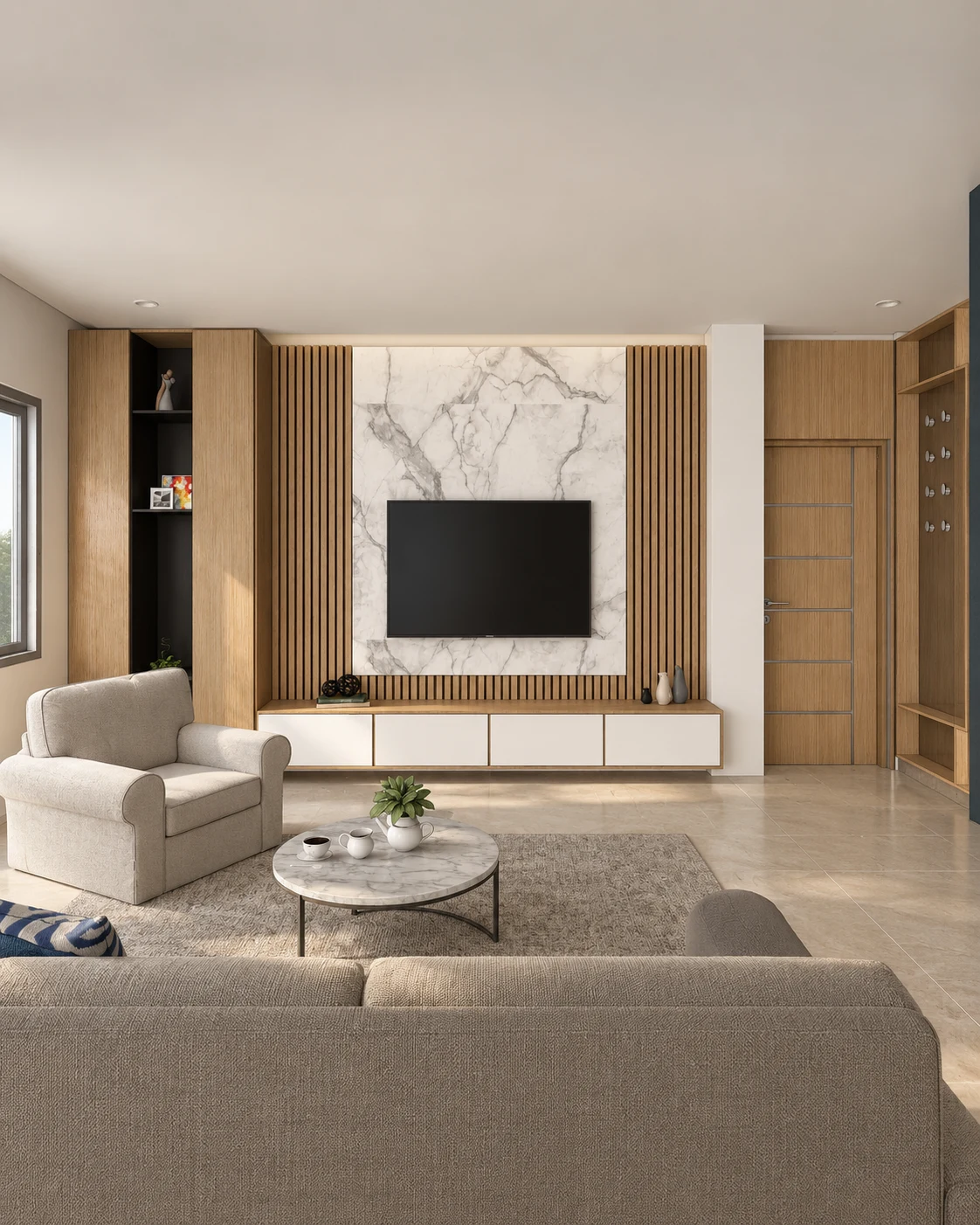
Begin with daily life
A comfortable home starts with understanding what happens inside it. Before choosing a style, write down the routines the space needs to support: arriving home, preparing food, working, resting and spending time together. Notice where those routines become awkward. A chair blocking a route or nowhere to put bags may matter more than the colour of a wall.
Choose two or three priorities for the design brief. These give you a useful way to compare options and avoid decisions driven only by an appealing reference image.
Give movement enough room
Look at the routes between doors, furniture and storage. Check how the room works when cupboard doors are open, dining chairs are pulled out and more than one person is moving through it. A layout that looks balanced on paper still needs to work in use.
In a shared room, furniture placement can distinguish a working area from a place to relax. You may not need a new partition. The right orientation, a change in lighting or a well-positioned storage unit can help define different activities.
Plan light around the task
Observe the space at different times of day. Note glare on screens, dark work surfaces and areas that become uncomfortable in strong sun. Daylight is valuable, but its direction and intensity need to suit the activity.
Combine general lighting with focused light where people read, cook or work. Where appropriate, separately controlled fittings allow the room to respond to different uses. Select actual fittings and test samples where possible; a rendering alone cannot confirm how a lighting installation will perform.
Choose materials for their real setting
Texture and colour influence the character of a room, while maintenance, durability and suitability determine how well it works over time. Examine physical samples in the space rather than relying only on a screen.
Natural does not automatically mean healthier, more durable or easier to maintain. Check product specifications, finishes and care requirements. A stone surface and a wool textile behave very differently: assess each material for its intended use instead of treating them as one category.
Make room for belongings
A calm interior does not have to be empty. It needs storage that reflects what you own and how often you use it. Keep frequently used items accessible, allow for the size of actual objects and decide what you want to display.
A useful exercise is to list what currently ends up on counters or chairs. Those items reveal missing storage or an inconvenient location. Solving that problem can improve the room without replacing everything in it.
Turn observations into a brief
Collect photographs, approximate dimensions, things that must remain and the changes that matter most. Include practical constraints such as access, budget and the timing of any works.
Interior design can bring these observations together into a coherent proposal. At LKC, the scope is agreed around the space and the support needed. The aim is a home that works for your everyday life, with a visual direction that follows those priorities.